



I’ve spent years obsessing over live fire. Cast iron, charcoal, wood smoke , if it’s cooked over flame, I’m paying attention. So when I finally made it to Bali, half my mental itinerary was food-based. I had a list of places, a rough route, and a lot of expectations.
Most of them were wrong in the best possible way.
The First Morning Market
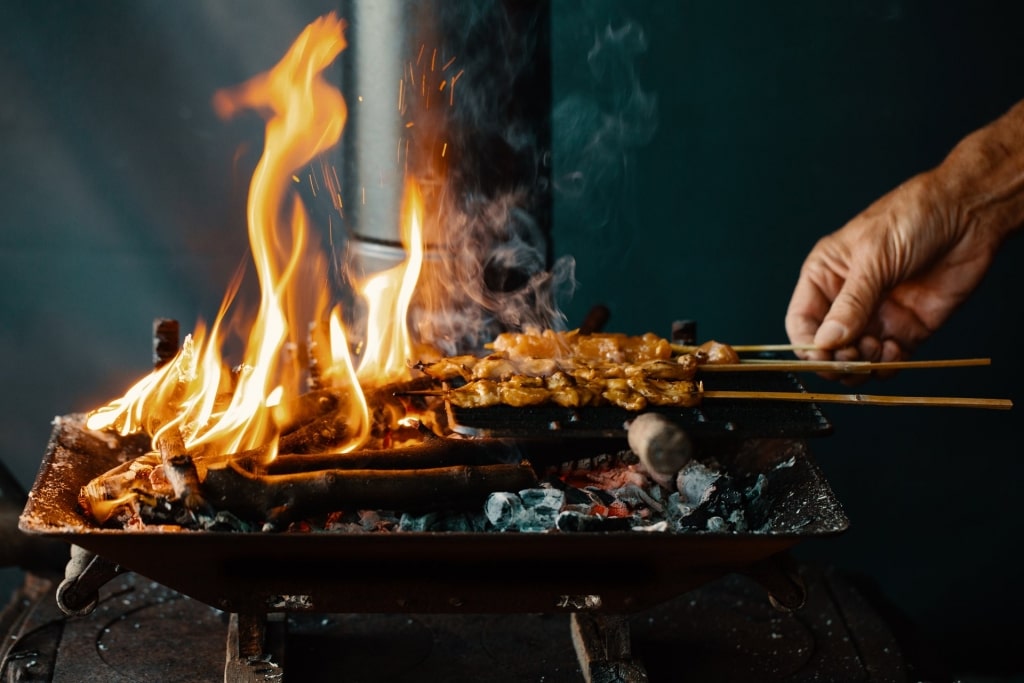
The first real surprise came before breakfast on day one. A small morning market, maybe twenty minutes outside the main tourist area, where vendors were setting up charcoal grills at 5 AM to cook pork satay for the morning crowd. Not for tourists. For the people who lived there.
The smell of the smoke and the sound of fat hitting the coals was familiar in the way that good cooking always is, regardless of where you are in the world. The charcoal was coconut shell , it burns hotter and cleaner than regular charcoal, and it gives the skewers a specific flavour I haven’t been able to replicate at home since.
Babi Guling: The Whole Animal Approach
Babi guling is Bali’s roasted suckling pig, and if you take slow cooking seriously, it will recalibrate your expectations. The preparation starts the night before. The pig is stuffed with a spice paste , galangal, turmeric, lemongrass, shallots, chilies , then cooked over coconut wood for several hours, turned by hand the entire time.
I watched the whole process at a small family warung outside Ubud. It’s not dramatic or performed for visitors. It’s just the way it’s done.
The finished result has a crackling skin that snaps differently from any roasted pork I’ve had elsewhere. The interior is tender without being wet. The spice penetrates all the way through in a way that suggests the paste and the heat and the resting time are all doing specific work.
Finding the Spots That Don’t Show Up in Search Results
The problem with food travel is that the best places don’t have websites. The warung doing the best babi guling in the area isn’t optimizing for Google. The satay cart at the market doesn’t have a Google Maps pin.
A friend who’d been to Bali twice suggested I look into a bali instagram tour before I went. I was skeptical , it sounded more visual than culinary. But his argument was practical: the guides who run these tours know the island in exactly the way food travelers need. The most photographically compelling places in Bali tend to be the same ones where the most interesting traditional food is still being made. Old markets, open-air cooking courtyards, roadside warung setups that have existed for generations.
The guide we had knew where the morning satay was the best, which family compound opens its kitchen for small groups on weekends, and which of the tourist-facing warungs near the major viewpoints were actually worth stopping at versus which ones were coasting on location.
The Connection Between Food and Place
One thing that struck me about Bali’s food culture is how inseparable it is from the physical space. The offerings placed outside kitchens every morning, the way cooking happens in open-air courtyards, the fact that traditional food is tied to specific ceremonies and seasons , none of that translates well to a restaurant context.
To actually understand it, you have to be in the places where it happens. Which means knowing where those places are, which requires local knowledge rather than a search engine.
What Bali’s Cooking Gets Right
The best meals I had cost almost nothing by Western standards. The portions were generous. The spicing was complex without being aggressive. And the people cooking them were proud of what they were making in the quiet way of someone who has been doing something well for a long time.
I’d been using Bali Touristic as a general resource for navigating the island before I arrived, and found it useful for understanding the geography and the range of what was available. The practical orientation helped once I started making decisions on the ground.
The Charcoal Detail I Kept Coming Back To
Weeks after I got home, I found myself thinking about that coconut shell charcoal. I looked into sourcing it , it’s available in some specialty cooking supply stores, though not cheap to import. I’ve used it a few times since and it does make a difference to the char.
But I don’t think that’s actually what I’m trying to recreate. I think I’m trying to recreate the 5 AM market, the fog still low, a cup of coffee from a thermos someone brought, standing next to a grill that had been running since before I woke up.
That’s the thing about cooking over fire anywhere in the world. You can replicate the technique. You can’t replicate the context.
More Stories
What Makes Saint Barth Popular Among Luxury Travelers?
What I ate in Shimla after escaping the Mall Road crowds
Island Hopping Escapades: Where Adventure Meets Serenity